
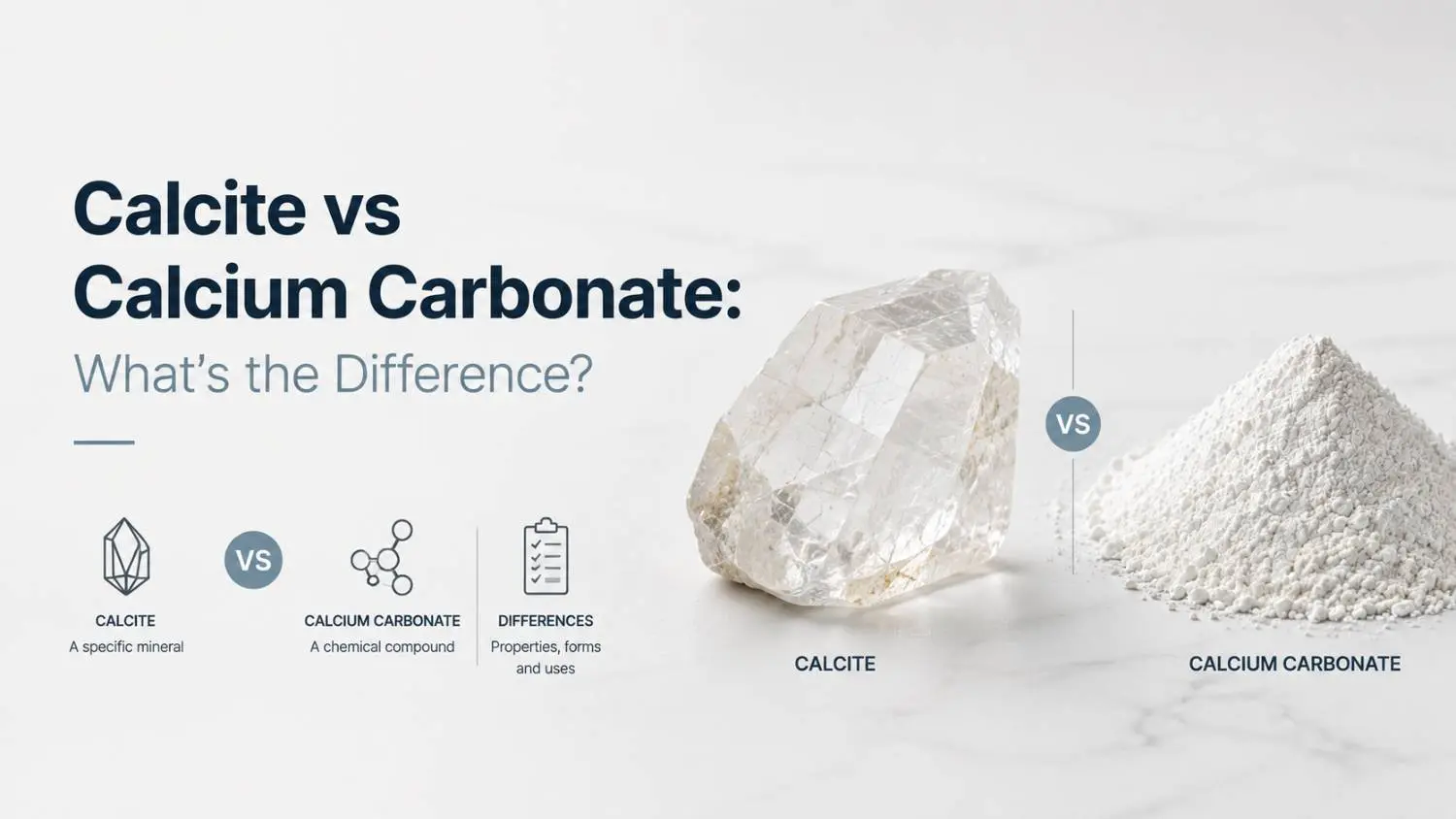
Quick answer first: calcium carbonate is the chemical compound, CaCO3. Calcite is a specific mineral, the most common and stable natural crystal form that compound takes. Calcite is a mineral form of calcium carbonate, while calcium carbonate is the broader chemical term. It also covers a couple of other mineral forms, aragonite and vaterite, which share the exact same chemical formula but arrange themselves into different crystal structures. If you’ve been comparing calcite vs calcium carbonate, or wondering whether is calcite the same as calcium carbonate, this is the whole answer in a nutshell. The rest of this article just fills in the why.
What Is a polymorph?
The word doing all the work here is “polymorph,” and it’s a simpler idea than it sounds. A polymorph is what you get when the same chemical compound can form more than one crystal structure. Same atoms, same formula, just arranged differently, and that different arrangement gives each form its own physical properties, things like hardness or stability. Calcium carbonate polymorphs come in three natural forms: calcite, aragonite, and vaterite. All three share the formula CaCO3. Calcite is by far the most common of the three, and it’s the one that matters most industrially, which is really what this whole article is building toward.
The Three Calcium Carbonate Polymorphs Compared
Seeing all three side by side makes the differences a lot easier to picture than reading about them in paragraph form.
| Polymorph | Stability | Mohs hardness | Where found |
| Calcite | Most stable, most common form under normal conditions | 3 | Limestone, marble, chalk, eggshells, mollusk shells, coral |
| Aragonite | Less stable, tends to convert to calcite over time | 3.5-4 | Mollusk shells, coral, pearls, cave formations |
| Vaterite | Least stable, rarest, generally metastable | Not well defined (fine crystalline) | Rare, occasionally in biological systems and some geological settings |
Why Does Calcite Dominate Industrial Use?
Of the three, calcite is the most thermodynamically stable under normal conditions, and that single fact explains most of what follows. It’s overwhelmingly the form found in commercial limestone, marble, and chalk deposits, which happen to be the raw materials used to produce industrial ground calcium carbonate, or GCC. Aragonite is chemically identical, but it’s less stable, and left alone over long enough timescales it actually tends to convert into calcite. That instability is part of why you mostly find aragonite in biological sources like shells and coral rather than in the kind of large, mineable deposits a supplier would actually quarry. If you’re curious about where these deposits actually come from and how sourcing works in practice, our Where Is Calcium Carbonate Found article goes into that in more detail.
Does the Distinction Matter for Buyers?
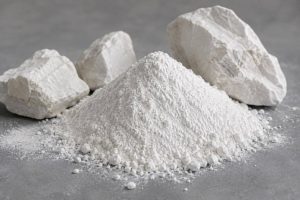
Here’s the practical, reassuring part of the calcite vs calcium carbonate question. If you’re specifying ground calcium carbonate for an industrial application, the material you’re getting is almost always calcite. You don’t usually need to call out the polymorph by name in a commercial context, because calcite is the default. In fact, “calcite” and “calcium carbonate” get used pretty much interchangeably in industrial and trade settings, precisely because calcite is so dominant that there’s rarely any ambiguity about which form is meant. What you actually need to specify is purity, particle size, and grade. The polymorph question mostly takes care of itself.
Calcite by default
Narm Powder supplies industrial-grade ground calcium carbonate, in its natural calcite form, suited to a range of applications. If you’d like full specifications or want to request a sample, visit our Calcium carbonate product page.