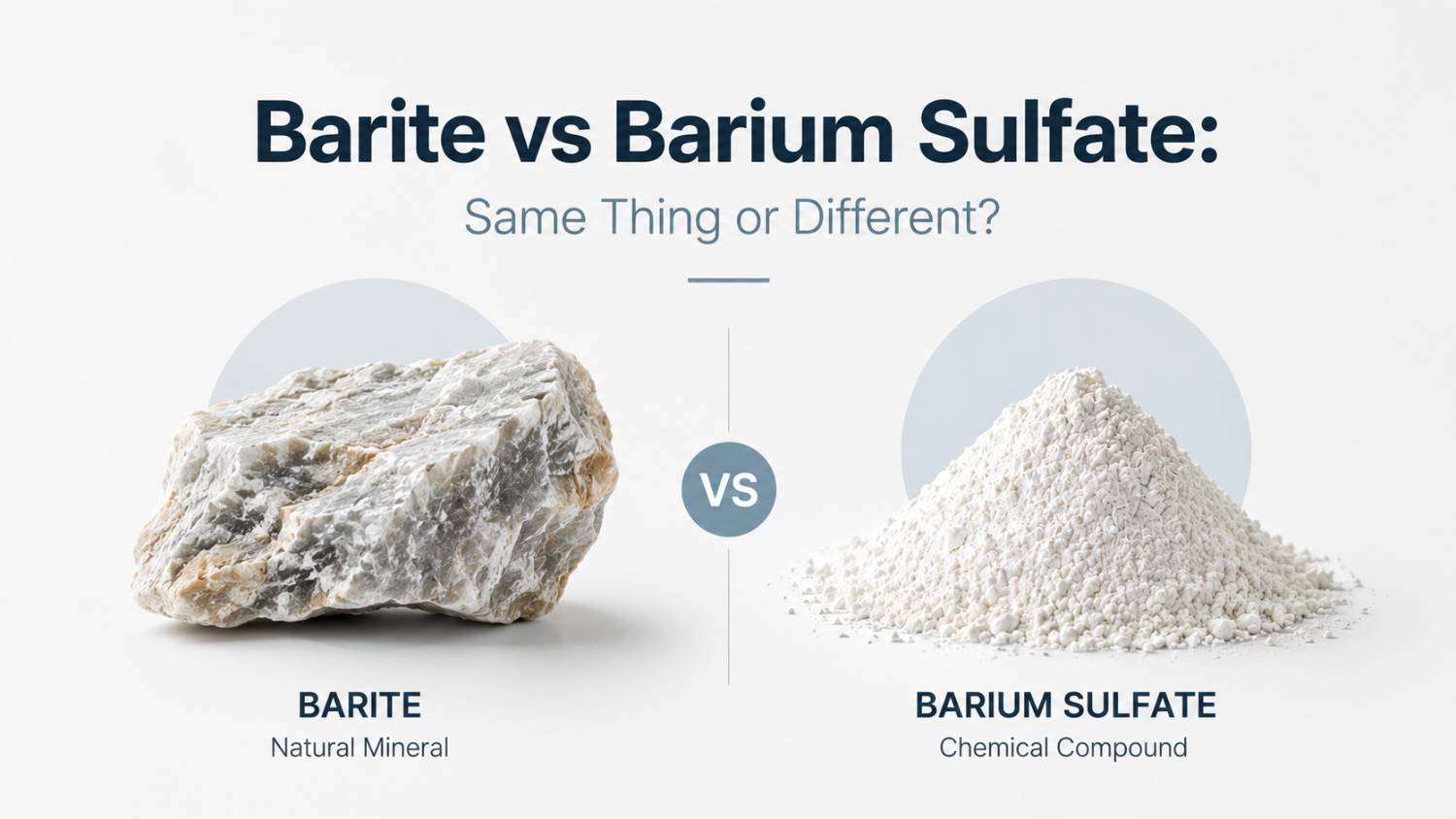
Here’s the short answer: all barite is barium sulfate, but not all barium sulfate is barite. Barite is the mineral name, the natural stuff pulled out of the ground. Barium sulfate is the chemical compound itself, and that compound can come from mining, in which case it’s barite, or from a chemical process, in which case it’s usually called precipitated barium sulfate. If you’ve been comparing barite vs barium sulfate in spec sheets and supplier sites, or typing “is barite the same as barium sulfate” into a search bar, you’re not missing anything. They’re related, just not identical.
A quick terminology table
Before going any further, it helps to see all four related terms side by side, since a lot of the confusion comes from these being used loosely in different contexts.
| Term | What it means |
| Barite / Baryte | The mineral name. Barium sulfate as it occurs naturally, mined and processed. “Baryte” is the international/British spelling; “barite” is standard American usage. |
| Barium sulfate | The chemical compound (BaSO4, CAS 7727-43-7). Can refer to the mineral (barite) or to synthetically produced precipitated barium sulfate. |
| Barytes | An older commercial or trade term, still used in some markets, referring to the ground or processed mineral product. |
| Precipitated barium sulfate / Blanc fixe | Synthetically manufactured barium sulfate, chemically identical to natural barite but produced by controlled chemical reaction rather than mining, for higher purity and finer particle control. |
Why the spelling varies: barite vs baryte
While we’re on terminology, it’s worth clearing up the barite baryte difference, since you’ll see both spellings floating around. They’re the same word, just spelled differently depending on where you are. Both come from the Greek word “barys,” meaning heavy, a nod to the mineral’s unusually high density compared to most other non-metallic minerals. In the US, “barite” is the standard spelling. Internationally, particularly in British and European mineralogical usage, “baryte” is more common. Neither one is more correct than the other. It’s a regional convention, not a technical distinction, so don’t read anything into which spelling a given source uses.
When the distinction actually matters for buyers
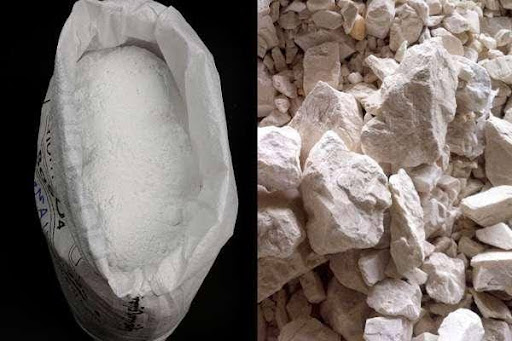
Most of the time, the barite vs barium sulfate question is purely a terminology one. But there are cases where the choice of term reflects a real difference in what you’re asking for. If you need raw density and high-volume tonnage, for something like drilling mud or general industrial fillers, you’ll typically specify “barite,” the natural mined mineral. If you need very high purity, a fine and uniform particle size, or optical-grade performance, for premium coatings or specialty plastics, for example, you’ll usually be looking at “precipitated barium sulfate,” sometimes sold under the trade name “blanc fixe.” That’s the synthetically produced form, and it’s built for a different kind of job. If you want the full technical comparison between the two, including how they’re made and where each one tends to outperform the other, we’ve covered that in more depth in our Natural vs Precipitated Barium Sulfate article.
FAQ
Either term works when you reach out
Narm Powder supplies industrial-grade barium sulfate and barite, and either term is understood when you get in touch. If you’d like full specifications or want to request a sample, visit our [LINK: Barium sulfate / barite product page].